
Understanding Inflammation: The Root of Many Health Challenges
Article Outline
▼Summary
▼Understanding Inflammation's Role in Our Health
We often hear about inflammation in relation to various health conditions, but what does it really mean for us? Inflammation is a natural response that can both protect and harm our bodies, and understanding its role is essential for our wellbeing. Let's explore its purpose, its dark side, and how we can address it to support our health.
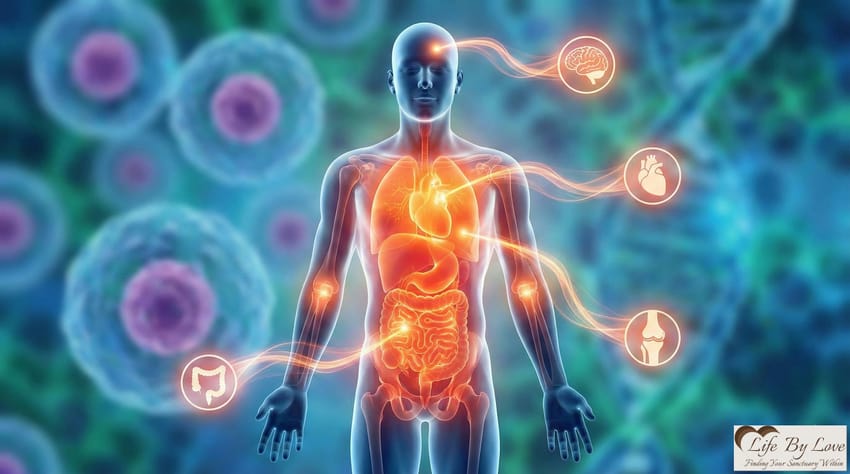
You have probably heard the word "inflammation" countless times. It comes up in conversations about gut health, heart disease, joint pain, autoimmune conditions, and even mental health. But what is inflammation, really? And why does it matter so much?
Understanding inflammation - both its purpose and its dark side - is one of the most foundational things you can do for your health. Because once you see how many seemingly unrelated symptoms and conditions share this common root, you begin to see a clearer path forward.
Inflammation Is Not the Enemy (At First)
Here is something important: inflammation itself is not bad. It is actually a vital part of how your body heals and protects itself.
When you cut your finger, inflammation is what makes the area red, warm, and swollen. Your immune system rushes blood and immune cells to the site, fights off any bacteria that might have entered, and begins the repair process. Without this acute inflammatory response, even minor injuries could become life-threatening infections.
The same process happens internally. When your body detects a threat - whether it is a virus, bacteria, toxin, or damaged tissue - inflammation kicks in to address it. In this context, inflammation is your friend.
The problem begins when inflammation does not turn off.
When Healing Becomes Harm
Acute inflammation is meant to be temporary. The threat is addressed, the repair happens, and then the inflammatory response subsides. Your body returns to its baseline state.
Chronic inflammation is different. Instead of a fire that burns hot and then goes out, it is a smouldering ember that never fully extinguishes. The inflammatory response stays activated at a low level, continuously, sometimes for months or years.
This low-grade, persistent inflammation does not cause the dramatic symptoms of acute inflammation. You might not even know it is there. But over time, it quietly damages tissues, disrupts normal cellular function, and contributes to the development of disease.
Research has linked chronic inflammation to an astonishing range of health problems:
- Heart disease and stroke
- Type 2 diabetes
- Autoimmune conditions
- Neurodegenerative diseases like Alzheimer's
- Depression and anxiety
- Chronic pain conditions
- Digestive disorders
- Cancer
- Premature ageing
This does not mean inflammation directly causes all these conditions, but it appears to be a significant contributing factor in many of them.
What Drives Chronic Inflammation?
If chronic inflammation is so damaging, why does the body do it? The short answer is that the body is responding to ongoing threats or stressors - it just cannot resolve them.
Some common drivers of chronic inflammation include:
Gut dysfunction. Your gut is home to roughly 70 percent of your immune system. When the intestinal barrier becomes compromised (often called leaky gut), particles that should stay inside the digestive tract can escape into the bloodstream. Your immune system sees these as invaders and mounts an inflammatory response. As long as the gut remains permeable, this response continues.
Chronic infections. Low-grade infections - whether bacterial, viral, or fungal - can trigger ongoing immune activation. These infections may not cause obvious symptoms but keep the inflammatory fire burning.
Excess body fat. Particularly visceral fat (the fat around your organs) is not just storage tissue - it is metabolically active and produces inflammatory compounds. The more excess fat, the more inflammation.
Blood sugar imbalances. Repeated blood sugar spikes and crashes trigger inflammatory responses. Over time, this contributes to insulin resistance, which further promotes inflammation in a vicious cycle.
Chronic stress. Stress hormones like cortisol are meant to be anti-inflammatory in the short term, but chronic stress disrupts this balance. Prolonged elevation of stress hormones can actually promote inflammation.
Poor sleep. Sleep is when your body does much of its repair and regulation work. Chronic sleep deprivation interferes with this process and promotes inflammatory markers.
Environmental toxins. Pesticides, heavy metals, air pollution, and chemicals in personal care products can all trigger immune responses.
Dietary factors. Highly processed foods, industrial seed oils, excessive sugar, and artificial additives can all promote inflammation. Meanwhile, deficiencies in anti-inflammatory nutrients make matters worse.
Signs Your Body May Be Inflamed
Chronic inflammation often does not announce itself with obvious symptoms. But there are signs that may indicate your body is dealing with ongoing inflammation:
- Persistent fatigue that does not improve with rest
- Brain fog and difficulty concentrating
- Digestive issues - bloating, irregular bowel movements, discomfort
- Joint pain or stiffness, especially in the morning
- Skin problems - acne, eczema, psoriasis, rashes
- Frequent infections or slow healing
- Unexplained weight gain, especially around the midsection
- Mood changes - anxiety, depression, irritability
- Allergies or sensitivities that seem to be getting worse
None of these symptoms are specific to inflammation - they could have many causes. But when several appear together, and especially when conventional approaches have not helped, chronic inflammation is worth considering.
Cooling the Fire
The encouraging news is that many of the factors driving chronic inflammation are within your influence. Addressing inflammation is not about a single intervention - it is about supporting your body across multiple fronts.
Nourish with anti-inflammatory foods. Vegetables, fruits, fatty fish, olive oil, nuts, seeds, and herbs like turmeric and ginger all have anti-inflammatory properties. A diet built around whole, unprocessed foods naturally supports a healthier inflammatory response.
Remove inflammatory triggers. Processed foods, refined sugars, industrial seed oils (like soybean and corn oil), and excessive alcohol all promote inflammation. Reducing these can make a meaningful difference.
Support your gut. Because gut health is so central to immune function, healing the gut often reduces systemic inflammation. This might mean addressing food sensitivities, supporting the microbiome, and repairing intestinal permeability.
Manage blood sugar. Eating in ways that keep blood sugar stable - adequate protein, healthy fats, fiber-rich foods, and limiting refined carbohydrates - reduces one of the major triggers of chronic inflammation.
Prioritize sleep. Seven to nine hours of quality sleep gives your body time to regulate inflammation. Poor sleep is not just tiring - it is inflammatory.
Move your body. Regular, moderate exercise has powerful anti-inflammatory effects. You do not need to run marathons - consistent movement is what matters.
Address chronic stress. Finding sustainable ways to manage stress - whether through meditation, time in nature, breathwork, or simply slowing down - helps regulate the inflammatory response.
The Foundation of Functional Health
In functional medicine, addressing inflammation is often one of the first priorities, regardless of what specific symptoms brought someone in. This is because inflammation is so foundational - it is involved in so many conditions and symptoms.
When you reduce chronic inflammation, multiple things often improve simultaneously. Energy returns. Brain fog lifts. Digestion normalises. Pain decreases. Mood stabilises. This is not magic - it is what happens when you address a root cause rather than chasing individual symptoms.
Understanding inflammation gives you a new lens for looking at your health. Instead of seeing a collection of unrelated problems, you may begin to see patterns - and more importantly, you may see a path toward feeling better.
Your body wants to heal. Sometimes it just needs you to remove what is fanning the flames and provide what supports resolution. Inflammation is not destiny - it is information, pointing you toward what needs attention.
Want to explore the gut-inflammation connection further? Learn about what a leaky gut is and why it develops. Curious about how inflammation affects specific conditions? Explore our articles on autoimmune basics and the gut-brain connection.