
Detoxification and Liver Support: How Your Body Cleanses Itself
Article Outline
▼Summary
▼Nourishing Your Body's Natural Detox Pathways
As we navigate the complexities of modern life, our bodies are constantly working to process and eliminate toxins. We can support this natural process by making informed choices about our diet, lifestyle, and environment. In this article, we'll explore the intricacies of detoxification, the role of the liver, and practical ways to nurture our body's innate ability to cleanse and protect itself.
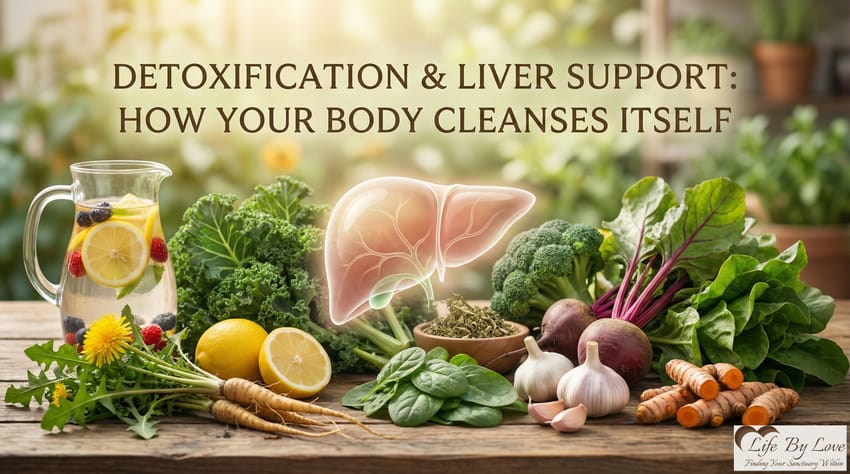
The word "detox" gets thrown around a lot - detox diets, detox teas, detox cleanses. But here is the truth: your body is detoxifying right now, and it has been every moment of your life. You do not need a special programme to start detoxifying. What you might need is support for the systems already doing this work.
Understanding how your body actually processes and eliminates toxins helps you make choices that support these pathways rather than overwhelming them.
What Detoxification Actually Means
Detoxification is the process by which your body transforms and eliminates substances that would be harmful if they accumulated. These substances include:
- Metabolic waste products (the normal byproducts of cellular function)
- Hormones that have done their job and need to be cleared
- Environmental toxins (pesticides, heavy metals, air pollution, chemicals in products)
- Substances you consume (alcohol, medications, food additives)
- Toxins produced by gut bacteria
Your body has multiple organs involved in detoxification, but the liver is the central processing plant.
The Liver: Your Detox Powerhouse
Your liver performs over 500 functions, but detoxification is one of its most crucial roles. It processes everything that enters your bloodstream - from the nutrients in your food to the medications you take to the toxins you are exposed to.
Liver detoxification happens in two main phases:
Phase 1 uses enzymes (primarily the cytochrome P450 family) to transform toxins into intermediate compounds. These intermediates are often actually more reactive and potentially harmful than the original substances - which is why Phase 2 is so important.
Phase 2 takes those intermediate compounds and attaches molecules to them (a process called conjugation) that make them water-soluble so they can be excreted through bile, urine, or stool.
For detoxification to work well, both phases need to function properly, and Phase 2 needs to keep pace with Phase 1. If Phase 1 is working faster than Phase 2, you end up with a buildup of those reactive intermediates - which can cause more problems than the original toxins.
Beyond the Liver
While the liver does the heavy lifting, other organs play important roles:
The gut eliminates toxins through stool. If you are constipated, toxins that should be leaving get reabsorbed. The gut also houses bacteria that can either help or hinder detoxification.
The kidneys filter blood and eliminate water-soluble waste through urine.
The skin eliminates some toxins through sweat.
The lungs expel volatile compounds through breath.
The lymphatic system moves cellular waste toward elimination.
All of these systems need to function well for effective overall detoxification.
Signs Your Detox Pathways May Need Support
When detoxification is not keeping pace with toxic load, symptoms can develop:
- Fatigue and low energy
- Brain fog and difficulty concentrating
- Headaches
- Skin issues - acne, rashes, dull complexion
- Digestive problems
- Sensitivity to chemicals, fragrances, or medications
- Hormonal imbalances
- Joint pain
- Mood issues
- Difficulty losing weight
These symptoms are nonspecific - they could have many causes. But if several are present, especially alongside known toxic exposures or a lifestyle that burdens detox pathways, support may help.
Supporting Your Detoxification Systems
Reduce the Incoming Load
The most impactful thing you can do is reduce the toxins coming in:
- Choose organic produce when possible, especially for the most heavily sprayed items
- Filter your drinking water
- Use natural cleaning and personal care products
- Avoid plastics for food storage, especially with heat
- Improve indoor air quality with plants and air filters
- Limit alcohol, which is processed entirely by the liver
- Be mindful of medication use (work with your provider)
Support Phase 1 and Phase 2
Both phases require specific nutrients:
Phase 1 needs B vitamins, vitamin C, vitamin E, and various minerals.
Phase 2 requires amino acids (glycine, glutamine, taurine), sulphur compounds (found in cruciferous vegetables, garlic, onions), and antioxidants.
Eating a nutrient-dense whole foods diet provides most of what these pathways need. Cruciferous vegetables (broccoli, cauliflower, Brussels sprouts, cabbage, kale) are particularly supportive of liver detoxification.
Keep Things Moving
Hydration is essential - water is needed to flush toxins through kidneys and bowels.
Regular bowel movements ensure toxins leave the body rather than being reabsorbed. Fiber supports this.
Movement stimulates lymphatic flow (your lymph system has no pump - it relies on muscle movement).
Sweating through exercise or sauna use supports elimination through the skin.
Support Your Gut
A healthy gut microbiome assists detoxification, while dysbiosis can actually increase toxic load. Constipation allows toxins to be reabsorbed. Supporting gut health is supporting detoxification.
Specific Liver-Supporting Foods and Herbs
Certain foods and herbs have particular affinity for liver support:
- Cruciferous vegetables support both Phase 1 and Phase 2
- Bitter greens (dandelion, arugula) stimulate bile flow
- Beets support bile production and flow
- Garlic and onions provide sulphur compounds
- Lemon supports liver function and digestion
- Milk thistle is a well-researched herb that protects liver cells and supports regeneration
- Dandelion root traditionally used for liver and digestive support
- Turmeric supports liver function and has anti-inflammatory properties
Consider Your Timing
Intensive detoxification support is not appropriate for everyone at all times. Pregnancy, breastfeeding, acute illness, and certain health conditions require caution. When toxins are mobilised faster than they can be eliminated, you can feel worse - sometimes called a "healing crisis" or Herxheimer reaction.
Gentle, ongoing support of detoxification pathways is generally safer and more sustainable than intensive periodic cleanses.
The Bigger Picture
Your body is designed to handle toxins - it has been doing so throughout human evolution. The challenge today is that the volume and variety of toxins we encounter is unprecedented. Supporting your detoxification systems is not about buying into detox marketing - it is about giving your body what it needs to do what it already knows how to do.
This is not about perfection. You cannot eliminate all toxic exposures. But reducing the load where you can, while supporting the pathways that process what does get in, shifts the balance in favour of your health.
Your liver is working for you right now. The question is whether you are working with it.
Want to learn more about supporting your body's systems? Explore understanding inflammation or learn about gut health fundamentals.